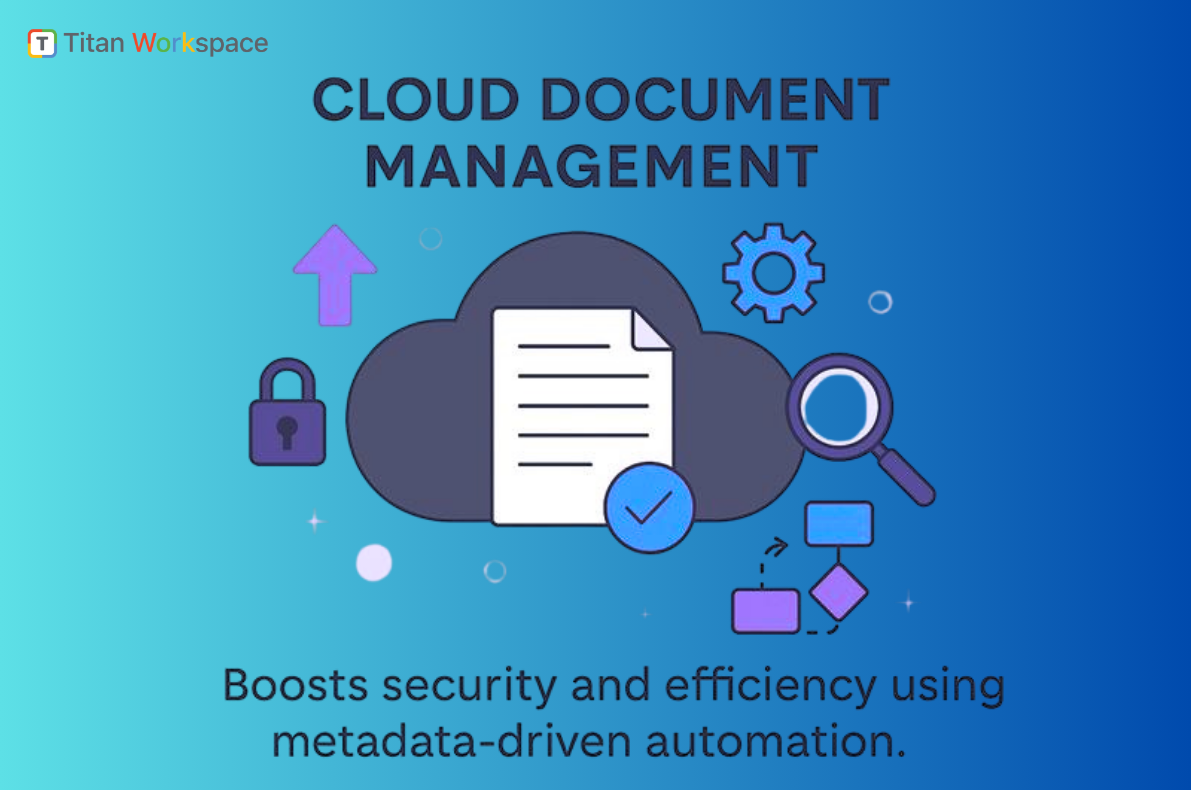
Managing documents efficiently in SharePoint can become challenging as your content grows. That’s where SharePoint Metadata plays a crucial role. Instead of relying solely on folders, metadata helps users classify, filter, and retrieve documents with ease. In this blog, we’ll explore How to Add Metadata to SharePoint Files, how to use Managed Metadata, and best practices for implementing a structured document management approach in SharePoint Online—especially with productivity tools like Titan Workspace.

What is Metadata in SharePoint?
Metadata is additional information assigned to your documents—such as department, project, client name, or document type. Unlike traditional folders, metadata enables dynamic filtering, sorting, and search, making content management more flexible and efficient. This approach is especially powerful when using the SharePoint Managed Metadata service.
Why Use Managed Metadata in SharePoint?
Managed Metadata is a centralized taxonomy system in SharePoint that allows organizations to maintain consistent tagging across sites and libraries. You can Create a Managed Metadata column and ensure users always select from predefined terms reducing errors and improving search precision.
With a SharePoint Managed Metadata column, businesses can maintain a structured hierarchy of terms. This is far more scalable compared to storing documents in multiple nested folders.
Here’s a simple process to enhance your document library with metadata:
How to Add Metadata to SharePoint Files
Step 1: Create Columns in Your Document Library
Navigate to your SharePoint library → Click Library Settings → Select Add a Column.
Here you can add Choice, Text, Date, or Managed Metadata fields.
Step 2: Create a Managed Metadata Column
To make use of a taxonomy, select Managed Metadata when creating a column. This allows you to connect the column with the Term Store, where enterprise-wide metadata is defined.
Step 3: Apply Metadata to Files
Upload files → Select the document → Use the Details panel to tag metadata fields such as project names or document categories.
Step 4: Use Metadata Views
Create custom views filtered by metadata. These dynamic views replace rigid folder structures and help users quickly locate content.
SharePoint Metadata Best Practices
- Use Managed Metadata over folders whenever possible.
- Avoid duplication centralize terms in the Term Store.
- Keep metadata simple make it easy for users to tag documents.
- Train users with SharePoint Metadata Examples Online to demonstrate usage.
- Review and update terms periodically.
Tools like Titan Workspace simplify SharePoint adoption by enabling metadata-driven document automation, user-friendly interfaces, and improved collaboration.
FAQ’s : About How to Add Metadata to SharePoint Files
1. How to tag documents in SharePoint?
Open the document library, select the file, and use the Details panel to assign metadata fields such as tags, categories, or Managed Metadata terms.
2. How to create managed metadata in SharePoint Online?
Go to SharePoint Admin Center → Content Services → Term Store and create term sets. Then, create a Managed Metadata column in your library to use these terms.
3. How to use Managed Metadata column in SharePoint Online?
Add a Managed Metadata column to a library, link it to a term set, and users can start tagging documents with predefined taxonomy terms.
4. How to add metadata in SharePoint document library?
Use Add Column from the library toolbar to create metadata fields such as text, choice, and Managed Metadata.
5. How to apply metadata to documents in SharePoint?
Edit metadata from the Details panel or use Quick Edit mode to tag multiple documents at once.
To know more about SharePoint Based Document Management System