Streamlining the Accounts Payable Process with SharePoint and Power Automate

The accounts payable process is crucial to ensuring that vendors and suppliers are paid accurately, promptly, and without any issues. Making the accounts payable process flow as tedious as possible is not a small task, though. Paper invoices, drawn-out approval processes, and manual data entry into the system are the only components of traditional accounts payable. However, the age of digitalization and automation is upon us. This blog examines how the accounts payable process can be made simpler, more error-free, and more efficient by utilizing Power Automate and SharePoint.

What is Accounts Payable Process?

The AP process typically involves several key steps:

  • Invoice Receipt: In the accounts payable process flow all the bills are received from vendors via mail, email, or fax.
  • Invoice Verification: Verification process of the received invoices are checked for accuracy, ensuring they match the purchase orders.
  • Approval Workflow: Verified invoices are routed to the appropriate personnel for approval.
  • Payment Processing: Approved invoices are processed for payment, and records are updated in the accounting system.
  • Record Keeping: All invoices and related documents are stored for future reference and auditing purposes.

What are the Challenges of Traditional Account Payable Process?

Traditional AP processes often face several challenges including:

  1. Manual data entry: Takes longer and has a higher chance of errors.
  2. Paper-Based Workflows: Hard to monitor and prone to loss.
  3. Long Approval Times: Missed discounts and late payments can result from protracted approval processes for invoices.
  4. Lack of Visibility: Difficulty in monitoring the payments and invoice status.
accounts-payable-process-IB1.png

How SharePoint and Power Automate Can Help in Accounts Payable Process Automation?

1. Centralized Document Management with SharePoint

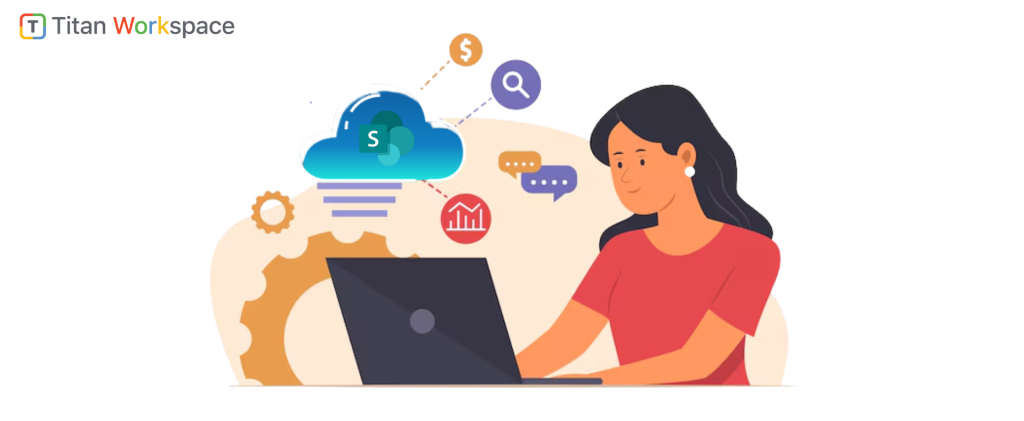
SharePoint is a robust platform for document management. Organizations can place all invoices in one central location and easily access and manage it by making the SharePoint document libraries. It consists of:

  • Version Control: This will ensure that the latest version of a document always appears.
  • Metadata and Tagging: It helps in categorizing and searching for invoices.
  • Permissions and Security: Gains access to sensitive financial data.

2. Automated Workflows using Power Automate

Power Automate, earlier known as Microsoft Flow, allows businesses to automate tasks and accounts payable workflow process. It can help support the AP process in this manner:

  • Automated Invoice Capture – Power Automate may be configured to automatically collect incoming invoices received through email and save them to SharePoint.
  • Approval Flows: They can configure automated workflows to route invoices to approvers based on predefined rules. The system can send notifications to the approvers and reminders for pending approvals.
  • Data Extraction and Validation: Utilizing AI Builder in Power Automate with data extraction from Invoices, validation via Purchase orders.
  • Integration to Use with ERP Systems: Power Automate integrates with several ERP systems. This integration makes the approved invoices directly available in the accounting system.

3. Improved Visibility and Reporting

With SharePoint and Power Automate, organizations can gain better visibility into their AP process. Dashboards and reports may be developed and maintained to track the status of invoices, time for approvals, and the payment schedule for each one. This will allow for the identification of bottlenecks that will help to make the process more efficient.

Read More: Custom List in SharePoint

Conclusion

This automatically improves efficiency, minimizes errors, and maximizes visibility as the accounts payable process is streamlined using SharePoint and Power Automate. Firms could then focus their attention to more strategic activities, such as optimizing vendor relations and better negotiation terms, by removing redundant tasks through automation and a single central place for document management. Unlock the power of automation today and transform your AP process now!

See few examples how SharePoint and Power Automate based process automation works.

Why SharePoint Is the Ultimate Document Management Solution for Modern Businesses – Powered by Titan Workspace

In today’s digital-first business environment, efficient document management is no longer optional it’s essential. Companies need secure, scalable, and collaborative platforms that streamline processes and centralize information. This is where SharePoint document management, enhanced by Titan Workspace, becomes a game changer for modern organizations.

Titan Workspace simplifies and extends the power of SharePoint, making it easier for businesses to adopt and maximize its features without technical complexity. Together, they create the ideal ecosystem for efficient collaboration, secure file storage, and automated workflows.

Why SharePoint + Titan Workspace Are the Perfect Document Management Combination

1. Centralized and Scalable Document Management

A major strength of a SharePoint document management system is its centralized, cloud-based repository. With SharePoint cloud document storage enhanced through Titan Workspace’s simplified interface, businesses can easily store, organize, and retrieve documents in a secure environment—without requiring deep SharePoint expertise.

This ensures better document organization in SharePoint, consistent metadata usage, and improved accessibility for all teams.

Benefits of SharePoint for Business with Titan Workspace

1. Enhanced Collaboration Across Teams

Collaboration is critical for business success, and SharePoint collaboration tools, combined with Titan Workspace’s user-friendly features, help teams work together effortlessly. Whether you’re co-editing files, sharing folders, or collaborating across departments, the platform supports seamless communication.

This combination amplifies the overall SharePoint benefits for document storage and collaboration, making teamwork more efficient and productive.

2. Security You Can Trust

Security remains one of the top reasons why businesses use SharePoint for document management. Titan Workspace enhances this with simplified access controls and secure sharing options. Together, the platforms leverage advanced SharePoint security features for document management, including encryption, compliance policies, and audit trails ensuring your data remains protected at all times.

3. Streamlined Workflows with Automation

SharePoint is known for its workflow capabilities, and SharePoint workflow automation becomes even easier to implement with Titan Workspace. From document approvals to notification triggers, Titan Workspace helps organizations optimize how SharePoint improves document workflows—reducing manual work and accelerating business processes.

Powerful Microsoft SharePoint Features, Made Easier with Titan Workspace

Some of the top Microsoft SharePoint features that Titan Workspace enhances include:

  • Version Control: Track document history and revert to previous versions effortlessly.
  • Metadata & Smart Search: Organize and retrieve files faster using structured metadata.
  • Integration with Microsoft 365: Titan Workspace ensures seamless use of Teams, Outlook, OneDrive, and more.
  • Custom Permissions: Simplified permission management for secure content access.
  • Mobile Accessibility: Access documents from anywhere, anytime.

By simplifying these features, Titan Workspace increases adoption and ensures businesses get maximum value from SharePoint.

Advantages of Using SharePoint for Document Organization with Titan Workspace

With Titan Workspace, document organization becomes intuitive and easy—even for non-technical users. Benefits include:

  • Simplified folder structures
  • Automated metadata assignment
  • Faster document retrieval
  • Policy-based retention and archiving

These features highlight the advantages of using SharePoint for document organization, making day-to-day operations smoother and more efficient.

Why SharePoint Stands Out and How Titan Workspace Elevates It

While SharePoint is already a robust platform, businesses often struggle with its complexity. Titan Workspace bridges this gap, offering a simplified digital workplace solution that enhances:

  • Usability
  • Collaboration
  • Security
  • Automation
  • Productivity

Together, SharePoint for business and Titan Workspace form a powerful combination for organizations seeking reliable document management with SharePoint.

Conclusion

SharePoint remains the leading platform for secure, scalable, and collaborative document management. With Titan Workspace as your integration partner, you unlock the full potential of SharePoint document management, making it easier than ever to organize, secure, and automate your digital content.

Whether you aim to enhance collaboration, streamline workflows, or secure sensitive data, Titan Workspace ensures you get the most out of SharePoint—empowering your business for long-term digital success.

Policy and Compliance Challenges Faced by Companies in the Malaysian Construction Industry

The construction industry in Malaysia plays a pivotal role in the nation’s economic development, contributing significantly to infrastructure and urbanization. However, this sector faces numerous policies and compliance challenges that can impede project efficiency and organizational growth. Implementing robust policy and Standard Operating Procedure (SOP) management systems is essential to navigate these challenges effectively. Tools like Titan’s Policy and Procedure Management Software offer comprehensive solutions to streamline policy approvals and ensure compliance.

Key Policy and Compliance Challenges in Malaysia’s Construction Industry

1. Regulatory Compliance & Licensing
The Construction Industry Development Board (CIDB) Malaysia mandates that all contractors and construction workers be registered and certified. Contractor classifications, ranging from G1 to G7, determine the scale and value of projects they can undertake. Non-compliance with these classifications or failure to obtain necessary permits can result in fines, project delays, or license revocations.

2. Occupational Safety and Health (OSH) Compliance
Under the Occupational Safety and Health Act (OSHA) 1994, enforced by the Department of Occupational Safety and Health (DOSH), construction companies are required to implement safety measures, including the use of Personal Protective Equipment (PPE), hazard management, and regular safety training. Non-compliance can lead to severe penalties and project shutdowns.

3. Environmental Compliance
The Environmental Quality Act 1974 requires construction projects, especially large-scale developments, to undergo Environmental Impact Assessments (EIA) to minimize environmental harm. Issues such as deforestation, pollution, and improper waste management can result in hefty fines and project halts. Additionally, sustainable construction practices are promoted under initiatives like the Green Building Index (GBI).

4. Foreign Labor Laws & Worker Welfare
The construction industry’s reliance on foreign labor necessitates compliance with the Employment Act 1955 and the Immigration Act 1959/63, which govern work permits, wages, and worker rights. Violations, including the employment of illegal workers or poor working conditions, can lead to penalties and reputational damage.

5. Contract and Procurement Issues
Disputes related to payments, project delays, and quality of work are common. Government projects require adherence to Public Procurement Guidelines to ensure transparency and fairness. Lack of clear contracts and dispute resolution mechanisms can exacerbate these issues.

7. Technology & Digital Compliance
The government’s Construction 4.0 initiative encourages the adoption of digital technologies like Building Information Modeling (BIM) and Industrialized Building Systems (IBS). Additionally, compliance with the Personal Data Protection Act (PDPA) 2010 is essential to ensure proper handling of data in digital transactions.

8. Taxation & Financial Compliance
Construction companies must comply with taxation policies, including Corporate Income Tax (CIT)Withholding Tax, and potential reintroduction of the Goods and Services Tax (GST). Non-compliance can result in penalties and legal action.

9. Sustainability & ESG Compliance
Investors and regulatory bodies are increasingly emphasizing Environmental, Social, and Governance (ESG) standards. Construction firms are expected to adopt eco-friendly building practices, maintain ethical labor practices, and ensure transparency in financial reporting.

To Know More About Policy & SOP Management System Watch: https://youtu.be/WATSV_hiihk

The Benefits of Automation and Streamlined Processes in Construction Compliance

Given the complexity of regulatory requirements and compliance in the construction industry, manual processes often lead to inefficiencies, delays, and increased risk of non-compliance. By automating compliance-related tasks and streamlining approval processes, construction firms can achieve:

  1. Faster Approvals and Decision Making – Automated workflows enable quick processing of regulatory documents, ensuring that necessary approvals for permits, safety guidelines, environmental assessments, and financial reporting are not delayed. This allows projects to move forward without administrative bottlenecks that can cause costly disruptions.
  2. Reduced Human Error and Improved Accuracy – Compliance errors, such as missing documentation, outdated policies, or incorrect safety protocols, can lead to legal repercussions. Automation ensures that the latest regulations are always referenced, minimizing the risk of costly mistakes and project rework.
  3. Improved Transparency and Accountability – A centralized compliance system provides real-time visibility into the status of approvals, policy updates, and regulatory submissions. Project managers, compliance officers, and stakeholders can track who approved what and when, reducing the likelihood of fraud or oversight.
  4. Cost Savings and Resource Efficiency – Manual compliance processes require significant administrative effort, from handling paperwork to chasing approvals. Automating these processes reduces labour costs, improves efficiency, and prevents penalties related to non-compliance with taxation, labour laws, and safety regulations.
  5. Better Risk Management and Proactive Compliance – Instead of reacting to regulatory breaches after they occur, automation enables proactive compliance tracking. Construction firms can set up alerts for expiring permits, upcoming policy changes, and safety training deadlines, ensuring they remain ahead of compliance requirements.
  6. Seamless Collaboration Between Departments – Compliance involves multiple stakeholders, including legal teams, HR, site managers, safety officers, and procurements teams. Automation ensures that the right policies and procedures reach the right people at the right time, preventing miscommunication and ensuring uniform policy enforcement across all construction sites.
  7. Scalability for Large-Scale Projects – As projects grow in complexity, manual policy management becomes increasingly difficult. Automated systems allow construction firms to scale compliance processes efficiently, ensuring that larger projects maintain the same level of regulatory adherence as smaller ones.

By implementing technology-driven solutions, construction firms can ensure smoother operations, better compliance adherence, and enhanced project efficiency.

policy-and-compliance-challenges-faced-by-companies-IB1.png

Leveraging Titan’s Policy and Procedure Management Software for Compliance

Navigating these complex compliance challenges requires an efficient and centralized policy management system. Titan’s Policy and Procedure Management Software, designed specifically for SharePoint and Microsoft 365 (M365), offers a robust solution to streamline policy approvals and ensure compliance.

Key Features and Benefits for the Construction Industry

  1. Centralized Policy Hub: Construction firms often struggle with managing multiple regulatory requirements, such as safety guidelines, subcontractor agreements, and labor laws. Titan provides a centralized repository where all policy documents, safety manuals, and compliance requirements are stored and updated.
  2. Streamlined Approval Process: Approving Standard Operating Procedures (SOPs) for workplace safetyequipment usage policies, or subcontractor agreements can be time-consuming. Titan automates the approval process, ensuring that regulatory-compliant policies move quickly through different levels of management, reducing bottlenecks.
  3. Enhanced Compliance Tracking: Ensuring that site managers and laborers comply with the latest OSHA safety protocols and environmental policies can be challenging. Titan tracks policy acknowledgments and can send automated reminders to ensure compliance, reducing risks of violations.
  4. Targeted Distribution for Different Departments: Policies need to be distributed to different stakeholders—site supervisors, engineers, safety officers, and procurement teams. Titan ensures that each department receives policies relevant to their operations, improving clarity and enforcement.
  5. Automated Notifications and Reminders: For expiring work permitssafety certifications, or BIM compliance updates, Titan provides automated alerts to responsible personnel, preventing lapses in regulatory compliance.
  6. Integration with Microsoft 365: Many construction firms use Microsoft 365 for project collaboration. Titan seamlessly integrates within the M365 environment, allowing for policy approvals and updates without requiring external cloud services.
  7. Comprehensive Search and Audit Trail: Need to retrieve past approvals for an Environmental Impact Assessment (EIA) report or a supplier contract? Titan’s search and audit trail functionality ensures easy retrieval of historical policy versions and approvals.
  8. Automating the Policy Management Lifecycle
    1. Policy Drafting: Co-author safety procedures, labor policies, or procurement guidelines with version control.
    2. Review Process: Allow designated safety inspectors, legal teams, and compliance officers to review policies efficiently.
    3. Approval and Publication: Automatically publish and distribute policies to all relevant personnel, ensuring seamless compliance implementation.

Know More: https://titan-dev.sandhyatech.com

Malaysia’s construction industry is highly regulated, and compliance failures can lead to fines, project delays, and risks. By leveraging Titan’s Policy and Procedure Management Software , construction companies can simplify compliance processes, automate approvals, and ensure that all stakeholders remain informed and aligned with the latest policies. With an efficient digital policy management system, firms can enhance operational efficiency, reduce regulatory risks, and improve overall project execution.

Why Choosing Workflow Automation Inside Microsoft 365 Matters for Enterprise Forms & Approvals

In the world of digital transformation, it’s no longer enough to simply have workflow automation—what matters even more is where that automation lives. For organizations leveraging Microsoft 365, choosing to build your forms and workflows inside the same ecosystem can deliver significant strategic advantages. This post explains why workflow automation inside Microsoft 365 beats non-M365 cloud solutions, and how Titan Workspace enables that advantage.

What “Forms & Workflows Inside Microsoft 365” Really Means

When we say, “forms and workflows inside Microsoft 365”, we mean that your digital forms, approval flows, and business process automations are built and operated natively within your Microsoft 365 tenant—integrated with your SharePoint, Teams, Outlook, Entra ID (formerly Azure AD) and the Microsoft Compliance & Governance stack. The entire stack—from identity to data residency to audit logs—remains within your controlled environment.

In contrast, many SaaS workflow vendors operate in separate clouds, with separate user stores, external data silos, and additional vendor contracts. This introduces complexity, risk and cost.

Top Business Advantages of Keeping Workflow Automation Within Microsoft 365

1. Unified Security & Identity

With Titan Workspace inside M365, your users (including external guests) inherit your Microsoft Entra ID rules, conditional access, MFA and policy enforcement. No separate login system. No extra credential store. This greatly simplifies access control and reduces identity-attack surface.

2. Audit-Ready Compliance & Governance

Since all workflow data resides within your Microsoft 365 tenant, you gain full visibility via Microsoft Purview, retention labels, audit logs and eDiscovery. External systems often require separate compliance setups and disconnected logs—which complicate audits and raise risk.

3. Data Residency & Sovereignty Simplified

Your workflow records are in your Microsoft 365 data region. For organizations in regulated industries or multiple geographies, this helps ensure that data residency and sovereignty obligations are met. External cloud tools may store data in unpredictable locations.

4. Lower Total Cost of Ownership (TCO)

Because you already pay for and manage Microsoft 365, deploying workflows inside the same platform leverages existing infrastructure. There’s no duplicate licensing for identity, storage or governance. External solutions mean additional vendor fees, separate support contracts and integration overhead.

5. Better User Adoption & Productivity

When users don’t have to switch platforms—being able to start a form in Teams, get approval via Outlook and view a workflow dashboard in SharePoint—they adopt much faster. Less context-switching, fewer training hours, higher usage.

6. Seamless Integration & Extensibility

Building workflows inside Microsoft 365 means built-in access to Power Automate, Graph APIs and SharePoint lists. No need to build fragile external integrations or connectors. This gives you agility and lowers implementation risk.

7. Single Governance & Lifecycle Management

You apply one set of policies across documents, sites and workflows—rather than managing separate consoles for external SaaS tools. That means simpler user off-boarding, retention policy enforcement, and fewer governance blind spots.

8. Enterprise-Grade Continuity and Reliability

Microsoft’s cloud operates with global infrastructure, high availability, robust DR and support. Hosting workflow automation inside that avoids vendor-specific reliability risks and ensures a consistent operational standard.

9. Future Readiness for AI & Intelligent Workflows

With everything inside Microsoft 365, you are positioned to leverage Copilot, AI agents and future Microsoft innovation. External tools often suffer from data silos and limited AI readiness because your enterprise data is scattered.

10. Strategic Simplification – One Platform Strategy

Instead of managing multiple cloud apps for forms, workflows, identity, compliance and storage, you consolidate on one platform. That simplifies vendor management, licensing reviews and vendor risk assessments.

Quick Comparison: Titan Workspace (Inside M365) vs External Workflow Platforms

DimensionTitan Workspace (Inside M365)Non-M365 Workflow Platforms
Security & IdentityUnified under Entra ID, MFA, CA rulesSeparate user stores, additional credential risk
Compliance & AuditInherits Microsoft Purview & logsIndependent compliance setup needed
Data ResidencyData stays within tenant/regionData may sit in third-party clouds
Cost EfficiencyLeverages existing M365 licenses & infrastructureDuplicate costs for storage, identity, support
User ExperienceNative in Teams, SharePoint, OutlookSeparate UI and logins; context-switching
Integration & ExtensibilityMicrosoft-native APIs, Power AutomateCustom connectors/integrations required
Governance & LifecycleOne console for policies, retention, off boardingMultiple consoles, higher governance risk
Reliability & ContinuityMicrosoft SLAs, global infrastructureVendor-specific SLA variability
AI & Future-ReadinessReady for Copilot + enterprise dataData silos limit AI potential
Strategic FitOne platform strategy for the enterpriseAdds another SaaS; increases vendor risk

How Titan Workspace Lets You Capitalise on the Inside-M365 Advantage

By running your form and workflow automation via Titan Workspace, you immediately tap into the advantages above. Some examples:

  • Faster time to value: Use your existing Microsoft 365 licenses, identities, and storage to get going in days—not weeks.
  • Lower risk onboarding: No need for separate vendor onboarding or credential audits—everything resides in your tenant.
  • Flexible complexity tiers: Whether you need simple approval forms or enterprise-grade multi-stage workflows with system integration, Titan Workspace supports it inside the same secure environment.
  • Growth-ready architecture: As you scale from 50 users to 300+ users, or from a handful of forms to 100+ workflows, the underlying infrastructure remains consistent and manageable.
  • Managed services optional: For organisations that want turnkey help, Titan Workspace offers full-service implementation while still staying inside Microsoft 365.

Conclusion – Make the Right Platform Choice for Your Organization

When your organisation already trusts Microsoft 365 for its productivity, collaboration and compliance stack, it makes strategic sense to keep your forms and workflows inside the same ecosystem. The advantages span security, cost, governance, integration, user adoption and future-ready AI. With Titan Workspace, you get the automation capabilities you need—built inside Microsoft 365, not alongside it.

If you’d like support in evaluating how many workflows you could migrate, estimating cost savings, or seeing a live demo inside your tenant, contact us at https://titanworkspace.com/workflow-automation-tool-for-microsoft-365/ and let us show you the difference.

How Can We Use SharePoint for Compliance and Audit Management?

Organizations today face a complex regulatory landscape: ISO 9001 audits in manufacturing, OSHA inspections in workplace safety, HIPAA compliance in healthcare, and even ATF Form 4473 record-keeping in firearms businesses. Each of these audits requires accurate policies, structured records, and audit-ready evidence.

Microsoft 365 and SharePoint provide a strong foundation for compliance management. However, while SharePoint has powerful out-of-the-box features, it was never designed to handle end-to-end policy compliance, employee acknowledgements, or audit-ready reporting.

That’s where Titan Workspace extends SharePoint into a complete compliance and audit management solution.

SharePoint and Microsoft 365: Policy Compliance Features Out of the Box

SharePoint and Microsoft 365 already provide several compliance-friendly features:

  • Centralized Document Repository – Store ISO manuals, OSHA safety policies, HIPAA forms, or ATF compliance records in structured libraries.
  • Version Control – Maintain document history for policies and SOPs to prove compliance during audits.
  • Microsoft Purview & Compliance Center – Apply retention labels and records management rules aligned with ISO or ATF retention requirements.
  • Access Control & Permissions – Restrict HIPAA-sensitive files or ATF records to only authorized staff.
  • Audit Logs & Monitoring – Track document access and changes for compliance reporting.
  • Data Security & Encryption – Ensure compliance evidence is secured with Microsoft’s enterprise-grade encryption.

These features make SharePoint a strong starting point for compliance management.

Is SharePoint Enough for Compliance and Audit Management?

Yes and no. SharePoint has all the ingredients but lacks the ready-made workflows that compliance managers need:

  1. Native to Microsoft 365 – Already part of most organizations’ infrastructure.
  2. Scalable and Integrated – Works with Teams, Outlook, and Power Automate.
  3. Trusted Security Model – Microsoft 365 carries certifications like ISO 27001, SOC, HIPAA, and FedRAMP.

But when it comes to policy acknowledgements, e-signatures, audit-ready evidence, and compliance dashboards, SharePoint needs heavy customization—driving up cost, IT overhead, and risk of project delays.

Real-World Constraints of SharePoint in Policy Compliance

  • Policy Acknowledgements – No native way to ensure employees have read or signed off on policies (a must for ISO and OSHA audits).
  • Approval Workflows – Out-of-box workflows are too simple for multi-step compliance approvals.
  • E-Signatures – Not supported natively; requires third-party tools or SharePoint Premium subscriptions.
  • Audit Trails – Logs exist but are raw and not presented in audit-friendly formats.
  • Evidence Preparation – Compliance officers often waste weeks preparing evidence from scattered SharePoint libraries.
  • High Customization Costs – Achieving compliance workflows requires developers, consultants, and ongoing IT support.

Titan Workspace: Extending SharePoint for Policy Compliance

Titan Workspace turns SharePoint into a ready-made compliance management system:

  • Policy Publishing & Acknowledgements – Track who has read and accepted ISO, OSHA, HIPAA, or ATF policies.
  • Audit-Ready Evidence – Generate instant reports showing compliance activities.
  • Controlled Document Versioning – Enforce structured version control aligned with auditor expectations.
  • E-Signatures – Capture digital sign-offs directly in SharePoint.
  • Secure External Portals – Share policies with regulators or auditors securely.
  • No-Code Automation – Build compliance workflows without developers or Power Apps.
  • Risk & Fraud Reduction – Replace manual, paper-based policy sign-offs with secure, trackable workflows.

Compliance and Audit Readiness: SharePoint vs. Titan Workspace

Audit / Compliance Type SharePoint Limitation Titan Workspace Advantage
ISO 9001 / ISO 27001 No structured employee policy acknowledgement tracking. Automated policy distribution with acknowledgement reports for ISO auditors.
OSHA (Workplace Safety) Lacks templates for safety incident forms and corrective actions. Digital e-forms & workflows for OSHA reporting, stored in Microsoft 365.
HIPAA (Healthcare) No built-in e-signatures for compliance acknowledgements. Integrated e-signatures with audit trails for healthcare staff compliance.
ATF (Form 4473 & Records) Raw version logs, not auditor-ready. Controlled document versioning & audit-ready reports for ATF inspections.
General Regulatory Audits High IT cost for customization and reporting. Prebuilt compliance dashboards and evidence logs without customization.

Frequently Asked Questions (FAQ)

Q1: Can SharePoint be used for ISO compliance audits?
Yes, SharePoint can store ISO manuals and procedures, but it lacks acknowledgement tracking and structured reporting. Titan Workspace closes this gap with audit-ready dashboards.

Q2: How does SharePoint handle OSHA compliance records?
SharePoint can store OSHA safety documents, but incident reporting and corrective actions usually require customization. Titan Workspace provides ready-to-use digital workflows.

Q3: Is SharePoint HIPAA compliant?
Microsoft 365 is HIPAA compliant at the infrastructure level, but SharePoint does not offer e-signature or acknowledgement tracking. Titan Workspace enables secure sign-offs and policy confirmations.

Q4: What is the best way to manage ATF Form 4473 in SharePoint?
Out-of-box SharePoint is not audit-ready for ATF requirements. Titan Workspace enforces version control and provides structured evidence reports.

Q5: Why is Titan Workspace better than customizing SharePoint?
Custom projects are expensive, time-consuming, and risky. Titan Workspace delivers predictable ROI with ready-made compliance tools built inside your Microsoft 365 tenant.

Conclusion

For organizations facing ISO audits, OSHA inspections, HIPAA compliance reviews, or ATF regulatory checks, SharePoint provides the foundation but not the finish line.

Titan Workspace extends Microsoft 365 into a compliance powerhouse—providing policy acknowledgements, e-signatures, audit-ready reports, and secure external portals.

If your compliance officers spend weeks preparing for audits, Titan Workspace ensures you are audit-ready every day, not just during audit season.

How to Streamline Your Travel Request Approval Workflow

According to the Global Business Travel Association, 1.3 million business trips are taken in the US every day.

This means that there are a lot of travel requests that need to be processed.

And if your organization regularly sends employees on business trips, then it’s more important than ever to streamline your travel request approval workflow.

Why?

  • A study by Concur found that companies that streamlined their travel request approval process saved an average of hours per year per employee on travel-related paperwork.
  • Another study by SAP found that companies that automated their travel request approval process saw a 10% reduction in travel expenses.
  • A study by the Association of Corporate Travel Executives found that 40% of companies have experienced a compliance violation related to travel expenses.
  • In the healthcare industry, the average time to approve a travel request is 3 days. This can lead to delays in travel and employee productivity losses.
  • In the financial services industry, the average cost of a travel-related expense report error is $1,000. That adds up quickly for large companies.
  • In the technology industry, the average employee spends 12 hours per year on travel-related paperwork. This can be a major distraction.

Clearly, A streamlined Workflow can save you time and money, and improve compliance and control over your travel expenses.

What Is a Travel Request Approval Workflow?

It is a systematic process that organizations follow to manage and facilitate employee travel. It facilitates both compliance and transparency.

The steps in the request management system may vary depending on the specific needs of your organization, but they typically include the following:

  1. An employee submits a travel request email.
  2. The travel request is reviewed by a manager or approver.
  3. The business travel request email is either approved or rejected.
  4. If the request is approved, travel arrangements are made.
  5. The employee is reimbursed for their travel expenses.

Now the question is what are the benefits of having such a travel approval system in place?

Benefits Of Streamlining Your Travel Request Approval

Look at these statistics first:

  • A company that implemented a streamlined travel request approval process saved an average of 15 hours per year per employee on travel-related paperwork.
  • Another company that automated its travel request approval saw a 10% reduction in travel expenses.
  • A third company that streamlined its travel request approval workflow received a 95% approval rating from employees.

Now, before moving toward the specific benefits, let’s acknowledge the struggles employees face without having an automatic approval system:

The Struggles of A Manual Travel Request Approval Process

  • Time-consuming: The manual process of submitting and approving travel requests can be time-consuming for both employees and approvers. Employees may have to spend hours filling out paperwork, and approvers may have to spend hours reviewing and approving requests.
  • Error-prone: The manual process is also error-prone. Employees may make mistakes when filling out forms, and approvers may approve requests that are not compliant with company policy.
  • Inefficient: The manual process is inefficient. It can take days or even weeks for a travel request to be processed.
  • Unsatisfying: Employees may be dissatisfied with the manual process. Not to mention, waiting for approvals and making travel request mistakes can be frustrating.

It’s time to shed light on the benefits of streamlining your travel request workflow.

  • Save time: It helps save time by automating the process and eliminating the need for manual paperwork.
  • Reduce errors: It helps reduce errors by providing clear instructions and guidelines for employees and approvers.
  • Improve efficiency: It helps improve efficiency by making it easier to track and manage travel requests.
  • Increase compliance: It helps improve compliance by ensuring that all travel requests are reviewed and approved in accordance with company policy.
  • Improve employee satisfaction: It helps improve employee satisfaction by making it easier for employees to get the approvals they need when they need them.

Now that you are assured of the importance of a travel and expense automation system within your organization, let’s unveil the steps to streamline your Travel request process.

Steps to Streamline your Travel Request Approval Workflow

Here are some steps you can take to streamline your travel approval system:

  1. Set clear goals for your travel request approval system: What do you hope to achieve by streamlining your workflow? Do you want to save time, and money, or improve compliance? Once you know your goals, you can start to develop a workflow that will help you achieve them.
  2. Create a well-defined travel request process: The first step in streamlining your workflow is to create a well-defined travel request process. This process should outline the steps that must be taken to submit, approve, and process a travel request.
  3. Use travel management software to automate your process: Travel management software can help you automate your travel request approvals. This can save you time and improve efficiency.
  4. Simplify the travel request form for employee templates: The travel request form is the first step in the travel request approval process. Make sure the form is clear and concise, and that it only asks for the information that is essential to the approval process.
  5. Set clear deadlines for each step in the approval process: Setting clear deadlines for each step in the approval process will help to ensure that travel requests are processed in a timely manner.
  6. Communicate effectively with employees and approvers: It’s important to communicate effectively with employees and approvers throughout the travel request approval process. This will help to ensure that everyone is aware of the process and that there are no delays.
  7. Monitor and improve your travel request workflow approval regularly: Once you have implemented a streamlined workflow, it’s important to monitor it regularly to make sure it is working as intended. You may need to make adjustments to the workflow as needed.

This is where Titan Workspace can be your ideal partner.

From travel request approval emails to confirmations, everything can be automated. You would be happy to know that its automation tools offer multiple ways to approve every step, including digital signatures.

travel-request-approval-workflow-flow

 Click to open expanded view

At each approval step, the system allows approvers to select appropriate actions, such as approving the current step, forwarding this for someone else to review, returning it to the initiators or previous approvers, and maintaining the history of all actions.

Once the process is complete, the entire form, along with its approval history, can be converted into a PDF.

In short, Titan Workspace provides a pre-configured travel request approval workflow that can be customized to meet your specific needs. You can rename labels, modify steps, or add conditions to make the workflow more suitable for your organization’s travel policies and procedures.

You can explore the other process: Ready to Use Workflows

Streamlining SOP Management: Overcoming Challenges and Ensuring Compliance

Managing Standard Operating Procedures (SOPs) is crucial for maintaining consistency, quality, and compliance across various industries. However, it comes with its own set of challenges. In this blog, we’ll explore these challenges, identify critical departments for SOP management, and discuss why industries and government agencies need SOP management software. We’ll also highlight the impact of poorly managed SOPs, the role of SOP management in compliance, and why SharePoint is the best tool for the job.

Challenges While Managing SOPs

  1. Version Control: Keeping track of the latest versions of SOPs can be difficult, leading to confusion and errors.
  2. Accessibility: Ensuring that all employees have access to the most current SOPs is essential but often challenging.
  3. Compliance: Meeting regulatory requirements and maintaining compliance can be complex and time-consuming.
  4. Training: Ensuring that employees are trained on the latest SOPs requires continuous effort and resources.
  5. Audit Trails: Maintaining a clear audit trail for SOP changes and approvals is necessary for accountability and compliance.

Critical Departments for SOP Management

  1. Quality Assurance (QA): Ensures that products and services meet quality standards.
  2. Human Resources (HR): Manages employee-related procedures and policies.
  3. Operations: Oversees day-to-day activities and ensures operational efficiency.
  4. Compliance: Ensures adherence to regulatory requirements and standards.
  5. IT: Manages technology-related procedures and security protocols.
sop-management-IB1.png

Industries That Need SOP Management Software (Few Examples)

  1. Healthcare: To ensure patient safety and regulatory compliance.
  2. Pharmaceuticals: For maintaining strict quality control and compliance with FDA regulations.
  3. Manufacturing: To standardize processes and ensure product quality.
  4. Finance: For regulatory compliance and risk management.
  5. Food and Beverage: To maintain food safety standards and comply with health regulations.

Read More: Transforming Patient Management Systems.

Government agencies rely on SOPs to ensure consistency, transparency, and accountability in their operations. For example:

  • Public Health Departments: Use SOPs to manage disease outbreaks and vaccination programs.
  • Environmental Agencies: Follow SOPs for inspections and enforcement of environmental regulations.
  • Emergency Services: Depend on SOPs for disaster response and management.

Impact of Poorly Managed SOPs

Not managing or poorly managing Standard Operating Procedures (SOPs) can lead to significant risks and challenges for organizations. Here are some key points:

  • Compliance Risks: Inadequate SOPs can result in non-compliance with regulatory requirements, leading to fines, legal issues, and potential shutdowns. For example, during FDA audits, companies with poorly managed SOPs often face stacks of errors and compliance issues.
  • Operational Inefficiencies: Without clear SOPs, employees may perform tasks inconsistently, leading to inefficiencies, errors, and wasted time. This can result in increased operational costs and reduced productivity.
  • Safety Concerns: In industries where safety is critical, such as healthcare and manufacturing, poorly managed SOPs can lead to accidents, injuries, and even fatalities. SOPs are essential for ensuring that safety protocols are followed consistently.
  • Training Challenges: Onboarding new employees becomes more difficult without documented procedures. This can lead to longer training periods, increased frustration, and a higher risk of errors during the learning curve.
  • Quality Control Issues: Inconsistent adherence to SOPs can result in variations in product or service quality, leading to customer dissatisfaction and potential loss of business.
  • Audit Trails: Maintaining a clear audit trail for SOP changes and approvals is necessary for accountability and compliance. Poorly managed SOPs can make it difficult to track these changes, leading to potential legal and regulatory issues.

Role in Compliance

SOP management software helps organizations maintain compliance by:

  1. Automating Updates: Ensuring that all employees have access to the latest SOPs.
  2. Tracking Changes: Providing a clear audit trail for SOP revisions and approvals.
  3. Ensuring Training: Facilitating employee training on updated procedures.
  4. Centralizing Documentation: Keeping all SOPs in a single, accessible location.

Why SharePoint is the Best Solution for SOP Compliance Software

  1. Integration: Seamlessly integrates with Microsoft 365, providing a familiar interface and easy access.
  2. Collaboration: Facilitates collaboration and communication among team members.
  3. Version Control: Automatically tracks changes and maintains version history.
  4. Accessibility: Ensures that SOPs are accessible from anywhere, at any time.
  5. Customization: Allows for customization to meet the specific needs of different departments and industries.

In conclusion, effective SOP management is essential for maintaining quality, compliance, and efficiency. By leveraging SOP management software like SharePoint, organizations can overcome challenges, ensure compliance, and streamline their operations.

Read more about SharePoint-based SOP Management Software at Titan Workspace.

An organization’s pain points with external user

Microsoft O365 offers great collaboration features due to SharePoint that is backed by enterprise level security. External users’ access within Office365 offers immense opportunities for organizations to collaborate seamlessly between Active Directory users and Non-Active Directory users such as Customers, Vendors, Sub-Contractors, Students, Consultants and so on.

Despite having such a strong capability for external cooperation, most organizations continue to under-leverage and under-utilize it. Many of its real use cases remain unexplored by organizations since they need extensive customization to provide that degree of experience to consumers.

Titan Workspace’s Guest User Portal

Guest user Portal module of Titan Workspace fulfills the business objectives of organizations by allowing them to extend collaboration platform with a branded look and feel to their external users thereby ensuring controlled, restricted, and relevant access for them. As a Microsoft Teams user, one can now assign appropriate template for their guest users or for a company.

Guest Portal comes loaded with Features

  • Every Client of an organization can have separate set of Guest Users which they would like to collaborate with. Depending on the type of Guest Users, a relevant template of Guest portal can be selected for each client.
  • Projects can be created for the Clients, and both internal Employees and Guest Users can be added to those projects so that they can collaborate.
  • Tasks can be created by and for the Guest Users, the Guest Users can update the progress on tasks and fill timesheets.
  • Document Management System is extended to the Guest Users so that they can have access to the documents shared with them.
  • A Dashboard where progress of all the tasks and projects can be seen at once with graphical representation.

Versatility of Guest User Portal

The beauty of Guest User Portal is that it can address the needs of large variety of Guest users, be it Students, Vendors, Consultants, Sub-contractors, Customers, or any other entity that is external to an organization but need some level of collaboration with Organization’s internal employees.

With a guest user portal, you have a plethora of options for resolving business issues. But I’ll share two use cases that demonstrate the benefits for both companies and educational institutions.

Guest User Portal for Students

Guest Portal can be used as a School Portal where the students can be on-boarded. There can be different Guest Portal for different grades or curriculums.

Teachers/Faculties can share assignments, notes, e-books, sample papers and Students can submit their Homework, assignments, projects, and answer papers to their Teachers/Faculties.

Teachers/Faculties can create projects and tasks for the students to complete a project or assignment and track the progress.

Guest User Portal for Companies

This scenario fits to every organization that needs to collaborate with an external entity, such as a temporary employee, a vendor, or an outsourcing agency, by granting them limited and controlled access to the Guest Portal.

Limited and Relevant Knowledge base can be exchanged between them like Agreements, Contracts, Purchase Orders, Invoices, Reports, or any other work-related documents.

Projects and Tasks can be created for these external entities and their progress and status of work can be easily tracked.

Conclusion

As can be seen, Guest Portal is a wonderful way for Organizations to collaborate with External Entities, effectively, seamlessly and in a very user-friendly way, without a threat of security breach of any kind. In general, adding these types of features to Microsoft Teams or Office365 requires a lot of significant customizations and cost. Titan Workspace offers them as readymade and as SaaS (Software as a Service).

If you would like to view a demo of this intriguing feature, please Book Demo: https://calendly.com/titanworkspace

Top 8 Benefits of Automating the Employee Onboarding Process

Giving new hires the best employee onboarding experiences is key to retention and engagement. But juggling the new employee onboarding process, from paperwork to training, can be overwhelming.

In this digital era employee onboarding automation can be the ideal solution to eliminate the manual repetitive task. Imagine an employee onboarding program that streamlines the entire new employee onboarding process flow, freeing your HR team to focus on strategic initiatives. There are many Employees onboarding software available in the market that automates tasks, ensuring a smooth onboarding employee experience with the best employee onboarding practices.

But apart from solutions, you can also build a customized employee onboarding workflow with solutions provider like Titan Workspace. Titan Workspace leverages the capabilities of SharePoint and Power Automate to build a customized workflow and integrated it within the existing the Microsoft 365.

Now you may wonder what’s the need for an automated workflow because switching to something new can be little tricky and hectic for the HR employees who has been working on the same manual process from years. Employee onboarding automation saves time, reduces errors, and empowers your HR team to create a winning digital employee onboarding experience. New employee onboarding process flows become efficient, and onboarding employee success becomes a reality.

What is Workflow Automation?

Workflow automation is essentially using software to streamline and automate repetitive tasks within the various applications you use. It helps eliminate manual work, making processes faster, easier, and more consistent. By automating workflows, businesses can minimize human error and free up employees for more strategic work.

benefits-of-automate-onboarding-process-IB1.png

What are the benefits of automating employee onboarding?

benefits-of-automate-onboarding-process-IB2.png

1. Significant Cost Savings: One of the biggest advantages of automated onboarding is the cost savings it provides. Traditional onboarding typically involves printing and distributing countless forms, documents, and training materials – an expensive and wasteful process. With an onboarding software solution, everything is digitized and centralized, eliminating the cost for all the manual paperwork, and reducing administrative overhead.

benefits-of-automate-onboarding-process-IB3.png

2. Increased Efficiency and Productivity: By automating repetitive, administrative tasks, onboarding automation frees up valuable time for HR staff to focus on more strategic priorities that drive growth and success. New hires can get up to speed more quickly, accelerating their path to full productivity.

benefits-of-automate-onboarding-process-IB4.png

3. Improved Data Accuracy: Manual data entry is highly susceptible to errors, whether due to transcription mistakes or new hires providing incorrect information. Automated employee onboarding minimizes these risks by enabling new hires to directly input data into the system with built-in validation checks.

benefits-of-automate-onboarding-process-IB5.png

4. Robust Data Security and Compliance: Handling sensitive employee data manually raises concerns around privacy, security, and compliance. Digital employee onboarding platforms provide a secure, centralized repository for managing this information with strict access controls and audit trails.

benefits-of-automate-onboarding-process-IB6.png

5. Consistent, High-Quality Experience: When onboarding is manual, the experience can vary dramatically between departments, managers, and locations. Automation ensures consistency, with every new hire receiving the same high-quality training and resources tailored to their role.

benefits-of-automate-onboarding-process-IB7.png

6. Reduced Overwhelm for New Hires: The first days and weeks in a new job can be overwhelming with information overload. New employee onboarding software or solutions can intelligently space out content delivery, allowing new hires to learn at their own pace without feeling bombarded.

benefits-of-automate-onboarding-process-IB8.png

7. Faster Time-to-Productivity: By streamlining administrative tasks and training, automated onboarding enables new employees to focus on learning their roles more quickly. This accelerates their ramp-up period, allowing them to start making meaningful contributions sooner.

benefits-of-automate-onboarding-process-IB9.png

8. Improved Employee Engagement: Starting a new job can be stressful, but an efficient, well-designed onboarding process flow helps reduce challenges and sets new hires up for success. When the process is smooth and engaging from day one, employees feel empowered and are more likely to be satisfied and committed long-term.

As the competition for top talent intensifies, companies are recognizing the critical role new employee onboarding best practices play in attracting, engaging, and retaining valuable team members. By leveraging modern onboarding employee software, organizations can create a seamless, efficient, and consistent experience that starts employees off on the right foot and keeps them motivated and productive for years to come.

Why choose Titan Workspace for Automating Employee Onboarding?

The demand for the workflow can vary from business to business and Titan Workspace understands it. Moreover, switching to a different and new solution or application can be challenging for employees. However, Titan Workspace utilizes the existing M365 subscription to integrate the employee onboarding workflow that can be customized according to the need and demand of the company.

Other benefits include:

1. Leverages Existing M365: Since Titan Workspace integrates seamlessly with Microsoft 365, you can automate onboarding within the familiar tools your employees already use, reducing the need for additional software and training. This can save you time and money on implementation.
2. Customized Solution: While the solution provider offers a pre-built onboarding workflow, it can also be customized to fit your specific needs. This means you can tailor the onboarding process to include the unique steps and requirements of your organization.
3. 50% Cost Reduction: Titan Workspace boasts a significant cost reduction, potentially up to 50% savings compared to another solutions provider. Business can save bucks while getting their customized workflow built.
4. Secure E-Signatures: Signatures play a crucial role in document verification and completing formalities during the onboarding process. Titan Workspace makes it easier for both the employee and the organization to sign the digital documents and complete the onboarding process.

FAQ’s

  1. What are the 4C’s of employee onboarding?
    .The 4C’s of employee onboarding: Compliance, Clarification, Culture, and Connection.
  2. Why automate employee onboarding?
    Automate employee onboarding to save time, improve consistency, and ensure a smooth transition for new hires.
  3. How do you automate client onboarding process?
    Onboarding process can differ from business to business. However, while using some tools like SharePoint onboarding process can be automated as per the business need

The Importance of Policy and Procedure Management Software for Fire Departments

Fire departments are critical to public safety, responding to emergencies and ensuring community well-being. However, managing the myriad policies, Standard Operating Procedures (SOPs), and compliance requirements can be a significant challenge. This blog explores why policy and SOP management is a pain point for fire departments, the productivity losses associated with manual management, and the compliance needs that, if unmet, can put cities at risk.

policy-and-procedure-management-software-for-fire-department-IB1.png

Why Policy and SOP Management is a Pain in Fire Departments

Fire departments operate under a complex web of policies and SOPs that govern everything from daily operations to emergency responses. Here are some reasons why managing these documents can be particularly challenging:

  1. Volume and Complexity: Fire departments have an extensive range of policies and SOPs, including Standards of Cover, Hydrant Use, Legal Requests, and more. Each document must be meticulously maintained and updated to reflect current regulations and best practices.
  2. Consistency and Accessibility: Ensuring that all personnel have access to the latest versions of policies and SOPs is crucial. Inconsistent or outdated documents can lead to confusion and errors during critical operations.
  3. Training and Compliance: Firefighters must be trained on all relevant policies and SOPs. Keeping track of training records and ensuring compliance with these documents is a continuous and resource-intensive task.

How Much Productivity Loss Happens in Managing These Policies and SOPs

Manual management of policies and SOPs can lead to significant productivity losses in fire departments. Here’s how:

  1. Time-Consuming Updates: Updating policies and SOPs manually is a labor-intensive process. Each change requires careful review, approval, and dissemination, which can take hours or even days.
  2. Inefficient Document Retrieval: Without a centralized system, finding the right document quickly can be challenging. Firefighters may spend valuable time searching for the latest version of a policy or SOP, reducing their efficiency.
  3. Training Delays: Manual tracking of training and compliance can lead to delays in ensuring that all personnel are up-to-date with the latest procedures. This can impact readiness and response times.

Compliance Needs and Risks of Violations

Compliance with policies and SOPs is not just a matter of best practice; it is often a legal requirement. Here are some key compliance needs and the risks associated with violations:

  1. Occupational Safety and Health Administration (OSHA) Standards: Fire departments must comply with OSHA standards, including Respiratory Protection, Hearing Conservation, and Personal Protective Equipment (PPE) requirements. Non-compliance can result in fines and increased risk of injury.
  2. National Fire Protection Association (NFPA) Standards: NFPA standards cover a wide range of fire department operations, from Apparatus Driving, Inspection, & Accountability to High-Rise Standpipe Fire Operations. Violations can lead to legal liabilities and compromised safety.
  3. Local and State Regulations: Fire departments must adhere to local and state regulations, such as Hydrant Flow Testing and Fire Inspections. Failure to comply can result in legal action and loss of public trust.

Examples of Critical Policies and Procedures

To illustrate the importance of effective policy and procedure management, here are three examples of critical documents in fire departments:

  1. Standards of Cover: This document outlines the fire department’s response standards, including response times and resource allocation. It is essential for ensuring that the department meets community expectations and regulatory requirements.
  2. Respiratory Protection: This SOP ensures that firefighters have the necessary equipment and training to protect themselves from hazardous environments. Compliance with this SOP is crucial for firefighter safety and regulatory adherence.
  3. Fire Investigation: This policy outlines the procedures for investigating the cause of fires. Accurate and thorough investigations are vital for legal compliance and improving fire prevention strategies.
policy-and-procedure-management-software-for-fire-department-IB2.png

The Role of Policy and Procedure Management Software

Given the challenges and risks associated with manual management, fire departments can greatly benefit from Policy Management Software, SOP Management Tools, and Procedure Management Systems. These tools offer several advantages:

  1. Centralized Document Control: A centralized system ensures that all policies and SOPs are easily accessible and up-to-date, reducing the risk of errors and inconsistencies.
  2. Automated Updates and Notifications: Automated systems can streamline the process of updating documents and notifying personnel of changes, saving time and ensuring compliance.
  3. Enhanced Training and Compliance Tracking: These tools can track training records and compliance status, ensuring that all personnel are adequately trained and up to date with the latest procedures.

How SharePoint and Microsoft 365 based policy management solution can help.

Using SharePoint for policy and procedure management offers several advantages such as Centralized document management, Integration with Microsoft ecosystem, Automated workflows, Security and Scalability.
In contrast, non-SharePoint based policy management solutions often lack these integrated features, leading to challenges such as scattered documents, poor version control, and limited collaboration capabilities. These limitations can result in inefficiencies and increased compliance risks.

Conclusion

Effective policy and procedure management is essential for fire departments to operate safely, efficiently, and in compliance with regulations. The use of SharePoint Policy Management Software, SharePoint SOP Management Tools, and SharePoint Procedure Management Systems can significantly reduce the pain points associated with manual management, minimize productivity losses, and ensure compliance with critical standards. By investing in these tools, fire departments can enhance their operational readiness and better serve their communities.

policy-and-procedure-management-software-for-fire-department-IB3.png

Solution:

Titan Workspace Policy and Procedure management solution built on SharePoint and M365 is a readymade option that can address these challenges of policy and SOP management, improve productivity, and ensure compliance, ultimately enhancing their ability to protect and serve the public.
Titan Workspace stands out by being deployed within the customer’s Microsoft 365 cloud environment, ensuring compliance with federal cloud standards. This makes it an ideal solution for municipalities in the USA that operate on a federal cloud for M365, as evidenced by its successful implementation in such settings.

Book a demo today https://calendly.com/titanworkspace/titan-workspace-book-a-demo?month=2025-01